Growth feels unpredictable when you cannot see what is creating pipeline and what is just creating noise. Here is how to use HubSpot to connect marketing activity to real revenue outcomes so your investment decisions are based on evidence, not assumptions.

KEY TAKEAWAY: Most businesses track marketing activity. Very few connect that activity to pipeline and revenue. HubSpot’s campaigns, attribution reporting, and marketing analytics give you the tools to close that gap, but only if you define what success looks like before you launch, tie campaigns to pipeline influence instead of vanity metrics, and use attribution to inform real budget decisions. When you can see what is actually driving revenue, you stop guessing and start investing with confidence.
You Know Something Is Working. You Just Cannot Prove What.
Revenue is coming in. Pipeline is moving. Marketing is active. But when someone at the leadership table asks the simple question, “What is actually driving our growth?”, the room gets quiet.
You could get a list of campaigns that ran last quarter. Someone may point to website traffic or email open rates. Maybe the answer is “a little bit of everything.” None of those answers is good enough to make a confident investment decision.
This is one of the most common blind spots in growing businesses. There is activity everywhere, but no clear line connecting it to the pipeline and the revenue it is supposed to generate.
According to a Gartner survey of over 500 data and analytics leaders, 30% of Chief Data and Analytics Officers cite the inability to measure the impact of their data and analytics initiatives on business outcomes as their top challenge. If data leaders at large organizations struggle with this, it is no surprise that growing businesses with smaller teams face the same problem.
This article breaks down why that disconnect exists, what it costs you, and how to use HubSpot to finally draw a clear line between marketing effort and revenue results.
Why Marketing and Revenue Feel Disconnected
The gap between marketing activity and revenue impact usually comes down to four problems that reinforce each other.
Campaigns Get Launched Without a Consistent Structure
When campaigns are set up with different naming conventions, different tracking methods, and different definitions of success, comparing them becomes nearly impossible. One campaign tracks form fills. Another tracks page views. A third has no campaign record in HubSpot at all. You end up with a collection of disconnected efforts that cannot be analyzed as a whole.
Teams Track Activity Instead of Outcomes
Opens, clicks, impressions, form submissions. These are activity metrics. They tell you something happened. They do not tell you whether that something created pipeline, influenced a deal, or contributed to revenue. When teams report on activity instead of outcomes, leadership gets volume without meaning. More does not equal better if you cannot connect it to money.
Attribution Gets Oversimplified
Most businesses default to last touch attribution. The prospect filled out a form, so credit goes to the landing page. But the prospect may have attended a webinar three months ago, read two blog posts, and received a nurture email before they ever touched that form. Giving all the credit to the last interaction ignores the work that created the opportunity in the first place. It also leads to budget decisions that overinvest in bottom-of-funnel activities and starve the top.
Success Is Measured by Volume Instead of Impact
Generating 500 leads sounds great in a report. But if only 12 of them were qualified, and only 3 became pipeline, and only 1 closed, the campaign did not perform well. It performed loudly. There is a difference. When success is defined by how many leads came in rather than how much pipeline or revenue came out, teams optimize for the wrong things.
What This Blind Spot Actually Costs You
When you cannot see what is driving revenue, every budget decision becomes a guess. And the guesses compound.
- You keep funding what feels right instead of what works
A campaign ran for 6 months and generated significant activity. But nobody checked whether it created any pipeline. It keeps getting funded because nobody has the data to challenge it. - You underinvest in what is actually working
Meanwhile, a quieter channel is producing fewer leads but higher quality ones that convert at twice the rate. Because nobody is looking at the full picture, it gets deprioritized. - Marketing and sales drift apart
Without shared visibility into what is creating the pipeline, marketing optimizes for lead volume, and sales complain about lead quality. The cycle repeats every quarter. - Leadership loses confidence in marketing spend
When the CMO cannot clearly show what a campaign contributed to revenue, the CFO starts asking harder questions. Eventually, marketing budgets get cut not because marketing isn’t working, but because nobody can prove it is.
How to Connect Marketing to Pipeline and Revenue in HubSpot
HubSpot gives you the tools to close this gap. But tools alone do not solve the problem. The shift is in how you think about campaigns, attribution, and measurement from the start.
Define Success Before You Launch Anything
Before a campaign goes live, answer four questions. What pipeline do we expect this to influence? What revenue outcome are we targeting? What is an acceptable customer acquisition cost? What is the expected payback period? If you cannot answer those questions, the campaign is not ready to launch. It might generate activity, but you will have no way to evaluate whether that activity mattered.
Use HubSpot Campaigns to Group and Measure Effort
HubSpot’s campaign tool lets you group related assets (emails, landing pages, blog posts, ads, social posts) under a single campaign and track their combined performance. Use it. Every campaign should have a consistent naming convention, a defined start and end date, and associated goals. When campaigns are structured this way, you can compare performance across efforts and see what is actually moving the needle.
Tie Campaigns to Pipeline Influence, Not Just Lead Volume
The real question is not how many leads a campaign generated. It is the amount of pipeline and revenue the campaign influenced. HubSpot’s attribution reporting allows you to see which campaigns touched contacts who eventually became deals. This is the connection most businesses are missing. When you measure pipeline influence rather than just lead volume, you start to see which campaigns are quietly doing the heavy lifting and which are just making noise.
Use Attribution Models That Match Your Buyer Journey
First touch attribution tells you what started the conversation. Last touch tells you what closed it. Multi-touch tells you what contributed along the way. No single model gives you the complete picture, so use more than one. In HubSpot, you can run reports with different attribution models to understand how your marketing efforts work together across the full buyer journey. This gives you a more honest view of what is driving revenue and helps you make smarter budget decisions.
Review and Optimize Monthly
Attribution is not a set it and forget it exercise. Markets shift. Campaigns mature. Audience behavior changes. Build a monthly review into your operating rhythm to assess which campaigns are generating pipeline, which channels are delivering the best returns, and where you need to adjust. The businesses that win at this are the ones that treat marketing measurement as an ongoing discipline, not a quarterly presentation.
What Changes When You Can See What Is Driving Revenue
When marketing activity is clearly connected to pipeline and revenue outcomes, the entire business dynamic shifts.
- Budget conversations become evidence-based. You stop arguing over what to fund and start investing based on the data.
- Marketing and sales align around shared numbers. Both teams can see what is creating the pipeline and work together to do more of it.
- Underperforming campaigns get caught early. Instead of running for six months before someone questions the results, you spot the problem in month one and adjust.
- Leadership gains confidence in the growth engine. When the CEO or CFO can open a dashboard and see how marketing dollars are translating into pipeline and revenue, trust in the function grows.
- You stop optimizing for volume and start optimizing for impact. The shift from “more leads” to “better pipeline” changes how the entire revenue team operates.
This is not about building a perfect attribution model. It is about building enough visibility that your investment decisions are informed by evidence instead of instinct.

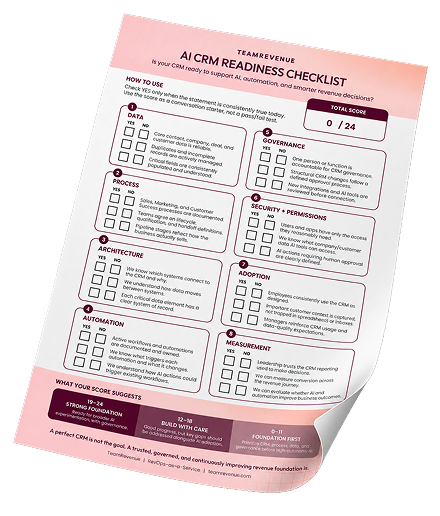
IS YOUR CRM READY FOR AI?
Make sure your CRM foundation is ready. Use the free checklist to uncover gaps before you automate.

The Bottom Line
Growth feels unpredictable when you cannot see what is creating it. You spend money on campaigns, generate activity, and hope it contributes to revenue. Hope is not a strategy.
HubSpot gives you the infrastructure to connect marketing efforts to business outcomes. But the infrastructure only works if you use it with intention. Define success before you launch. Structure your campaigns so they can be measured. Tie effort to pipeline influence. Use attribution to understand your full buyer journey. And review the data monthly to adjust in real time.
When you can clearly answer the question “What is actually driving our revenue?”, you move from reacting to leading. And that is when growth starts to feel predictable.

WANT THE FULL FRAMEWORK?
Download the free e-book: Driving Business Outcomes with HubSpot. Ten chapters covering the business outcomes every owner should expect from their CRM, from data trust to scaling without breaking.
Frequently Asked Questions
Marketing attribution in HubSpot is a reporting method that shows which marketing activities and campaigns touched contacts who eventually became deals. It helps you understand not just which campaigns generated leads, but which campaigns actually influenced pipeline and revenue.
First-touch attribution assigns all credit to the first marketing interaction a contact had with your business. Multi-touch attribution spreads credit across all the interactions that contributed along the way. Multi-touch gives you a more complete picture of how your campaigns work together to create a pipeline.
Use HubSpot’s attribution reporting to connect campaign activity to deal creation and revenue. Look beyond lead volume and focus on pipeline influence, which shows how much potential revenue a campaign touched during the buyer journey. Review this monthly to spot trends and make informed budget decisions.
This usually happens when teams measure activity (clicks, opens, form fills) rather than outcomes (pipeline created, deals influenced, revenue generated). Activity metrics tell you something happened. Outcome metrics tell you whether it mattered. Shift your reporting to focus on pipeline and revenue contribution.
Monthly. Markets shift, campaigns mature, and audience behavior changes. A monthly review allows you to catch underperforming campaigns early, double down on what is working, and adjust budget allocation before the quarter is over.
Full multi-touch attribution reporting is available in HubSpot Marketing Hub Enterprise. Marketing Hub Professional gives you access to campaigns, forms, tracking, and marketing analytics, which provide a strong foundation for connecting marketing to the pipeline. The right tier depends on the complexity of your buyer journey and the level of granularity your attribution needs.