One of the most common tensions in growing sales organizations is this:
Leadership wants tighter pipeline inspection. Reps feel overwhelmed by more meetings.
Both sides are right.
The answer is not increasing the number of calls. It is improving the structure behind them.
Strong Revenue Operations (RevOps) creates clarity, consistency, and focus. When done properly, pipeline inspection should reduce stress, not increase it.
Here is how to improve inspection rhythm without creating rep fatigue.
1. Shorten the Meeting. Deepen the Standard.
Long, open-ended pipeline reviews are exhausting. They lack consistency and often drift into storytelling. Instead, implement a tight, repeatable framework. Every deal reviewed should answer the same core questions:
- What problem is confirmed?
- Who is the decision maker?
- What is the agreed next step with a specific date?
- What could kill this deal?
- What stage criteria have objectively been met?
When every deal follows the same structure, two things happen:
- Reviews move faster.
- Reps prepare better.
Structure drives discipline. Discipline drives clarity.
This starts with clearly defined stage exit criteria and required fields that align with these questions. If the Customer Relationship Management (CRM) system enforces the standard, the meeting becomes validation rather than interrogation.
2. Inspect Fewer Deals, Not All Deals
Not every deal deserves live discussion. RevOps should guide attention toward:
- Late-stage deals tied to the current forecast
- Large strategic opportunities
- Deals stalled beyond the average stage duration
Everything else can be reviewed asynchronously in the CRM.
When leaders try to review the entire pipeline every week, they dilute focus. Forecast calls become long and fragmented. Reps feel scrutinized rather than supported.
A focused review builds confidence in the number instead of noise in the system.
3. Separate Coaching from Forecasting
Many organizations struggle to keep coaching separate from forecasting, but they are distinct and should be treated that way.
Pipeline inspection is about truth. Coaching sessions are about skill development.
When these get mixed together, meetings drag on. Reps feel judged. The energy shifts from clarity to defensiveness.
Forecast meetings should focus on:
- Deal validity
- Stage integrity
- Next actions
- Risk assessment
Coaching can happen in a separate rhythm. That is where you work on discovery depth, objection handling, negotiation strategy, and positioning.
RevOps creates the structure. Sales leadership drives the skill.
4. Let Data Dictate Where You Zoom In
Every stage does not require equal attention at all times.
If stage conversion drops, inspect that stage more deeply for a few weeks.
If sales cycle time increases, analyze the duration by stage.
If forecast accuracy slips, tighten exit criteria.
HubSpot reporting makes this simple when dashboards are built correctly. Stage conversion, average deal age, and stalled deal reports should guide your attention.
Data tells you where the friction lives. Without that visibility, leaders default to reviewing everything equally. That approach creates fatigue and rarely solves the root issue.
5. Create a Predictable Inspection Rhythm
Sales teams thrive on predictability. A clear cadence reduces overwhelm because reps know what is expected and how to prepare.
For example:
- Weekly 30-minute forecast inspection
- Biweekly deeper deal strategy review
- Monthly stage conversion and pipeline health analysis
When the rhythm is consistent, meetings become lighter. There is no surprise scrutiny. Preparation becomes routine.
This is a RevOps design decision, not just a sales management preference.
6. Reward Disqualification
One of the biggest sources of pipeline bloat is reps protecting weak deals.
If leadership only celebrates closed won, reps hesitate to disqualify.
Strong RevOps cultures reward clean pipelines. When early disqualification is reinforced positively, inspection becomes easier over time. Forecast accuracy improves. Close rates increase. Stress drops.
A lean pipeline is a healthy pipeline.

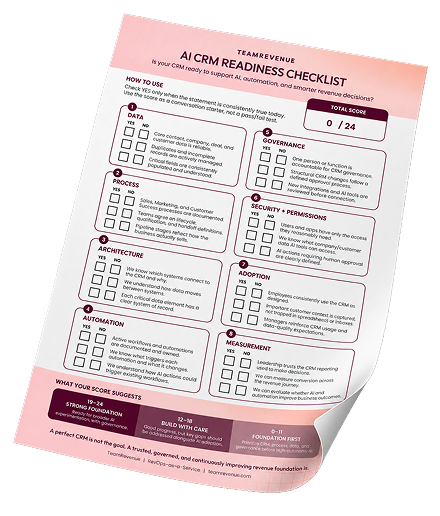
IS YOUR CRM READY FOR AI?
Make sure your CRM foundation is ready. Use the free checklist to uncover gaps before you automate.

The Real Unlock
Pipeline inspection should create clarity.
When the process is fair, consistent, and backed by data, it becomes structure, not pressure.
If you are looking for the single highest leverage improvement, start with clearly defined exit criteria between stages. In most organizations, tightening that alone eliminates half the noise in pipeline reviews.
RevOps is not about adding meetings. It is about building a system where meetings become lighter because the structure does the heavy lifting.
Download the complete e-book to continue building clarity, alignment, and leadership insight.